
Most job seekers treat LinkedIn as an online copy of their CV. Recruiters do not read it that way. A recruiter scanning South African candidates usually spends a few seconds on your headline and photo before deciding whether to open your profile at all, and only a little longer deciding whether to message you. Getting those first few seconds right matters as much as the content underneath them.
This guide covers what South African recruiters actually look at, in the order they usually look at it, and what to change in each section.
Why LinkedIn matters alongside your CV in South Africa
Recruiters and hiring managers in South Africa use LinkedIn for two things your CV cannot do on its own: finding you before you apply, and checking you after you have. A recruiter searching for “financial manager Johannesburg” or “supply chain analyst Cape Town” is reading headlines and photos in a results list, not full profiles. Separately, once you do apply through a job board or agency, many recruiters will look you up on LinkedIn anyway, so an inconsistent or thin profile can quietly undercut a strong CV.
That means your profile needs to work in two different modes: skimmable enough to earn a click from search, and detailed enough to hold up once someone has opened it.
Your headline: more useful than your job title alone
By default, LinkedIn fills your headline with your current job title and employer. That is a wasted opportunity. Recruiters search LinkedIn using keywords, and a headline that only says “Accountant at XYZ Ltd” misses most of the terms a recruiter might actually search for.
A stronger headline combines your role, your specialism and one or two keywords a recruiter would search for, for example: “Financial Accountant | IFRS Reporting, Budgeting & SARS Compliance | Johannesburg.” If you are between roles, say so plainly rather than leaving the field blank or vague: “CV writer and brand consultant | open to opportunities in content strategy” is far more useful to a recruiter than nothing at all.
Your photo and banner: the first filter
A recent, professional headshot is one of the simplest things to get right and one of the most commonly ignored. Profiles without a photo get noticeably fewer views in LinkedIn’s own data, and recruiters in South Africa generally skip past faceless profiles in search results without opening them. You do not need a professional photographer: a well-lit, plain-background photo taken on a phone, with appropriate business attire for your sector, is enough.
The banner image behind your profile photo is free real estate most people leave as the default blue pattern. Use it for something relevant to your field, your industry body logo, a professional background, or simply your name and title restated cleanly.
Your About section: answer “so what” early
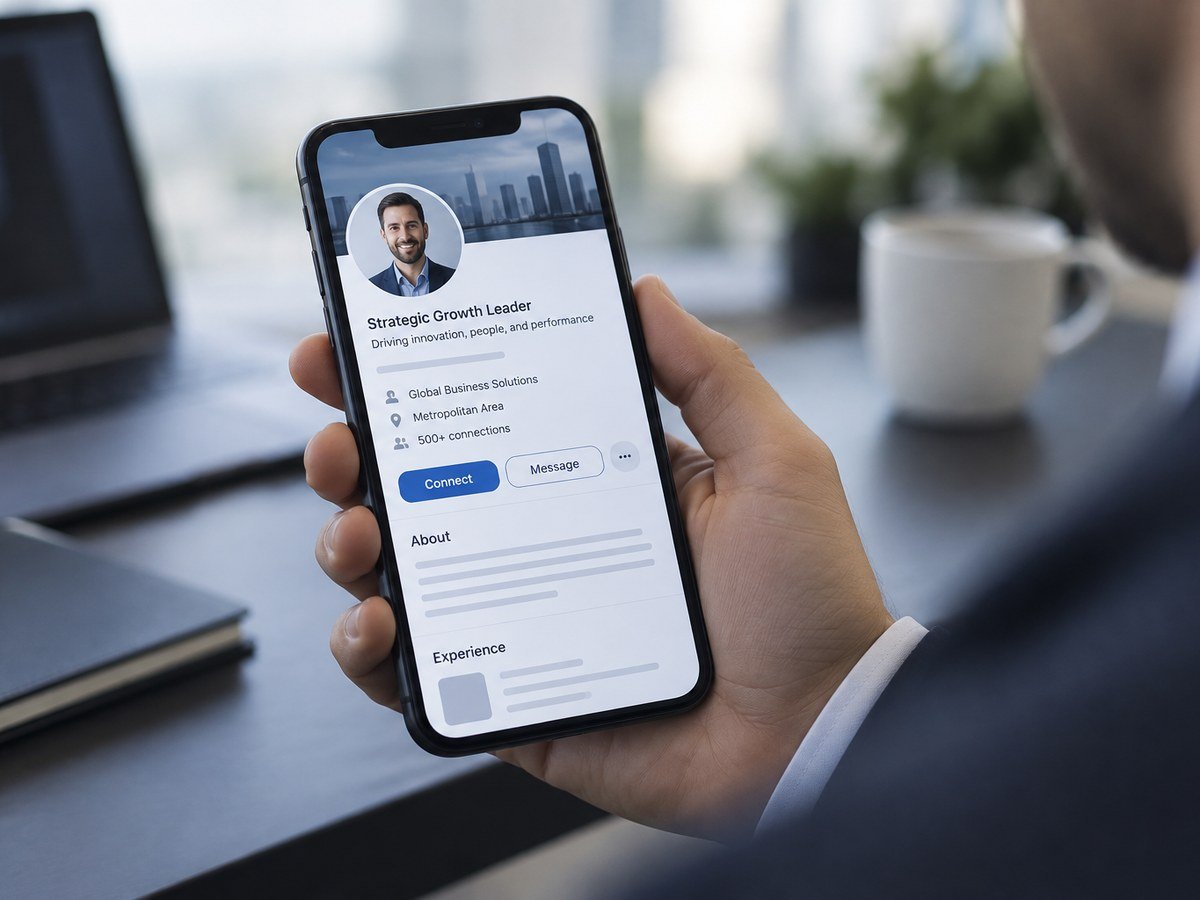
The About section is where most South African profiles go wrong: either left blank, or copied in full from a CV summary written in the third person. Neither works. Recruiters read the first two lines before deciding whether to expand the rest, so open with who you are and what you deliver, not a generic career overview.
Write in the first person. Lead with your specialism and the value you bring, follow with two or three concrete, quantified achievements, and close with what you are looking for next if you are actively job searching. Three to five short paragraphs is a reasonable length: long enough to show substance, short enough that most of it is visible before a reader has to click “see more.”
Your experience section: outcomes, not duties
Recruiters skim experience entries for evidence, not job descriptions. Each role should open with one line on scope (team size, budget, region covered) and then two to four bullet points on what you actually achieved, ideally with a number attached: a percentage, a rand value, a headcount, a timeframe. “Responsible for managing the sales team” tells a recruiter nothing they cannot guess from your job title. “Grew regional sales revenue by 22% over 18 months while managing a team of eleven” tells them exactly why you are worth a conversation.
If you have changed employers several times, keep each entry’s achievements tight rather than padding every role equally: recruiters notice when older, less relevant roles get as much space as your current one.
Skills and endorsements: keep the list relevant
LinkedIn allows up to fifty skills, but a long, unfocused list dilutes the ones that matter. Keep your top three to five skills genuinely relevant to the roles you want, since these are the ones shown most prominently and the ones LinkedIn’s search weighs most heavily. Ask colleagues and former managers for a handful of genuine endorsements on those specific skills rather than collecting dozens of endorsements on skills you no longer use.
Visibility and settings most people miss
A surprising number of South African profiles are set to private by default, or have “Open to Work” switched off entirely. If you are actively job searching, turning on “Open to Work” and setting its visibility to recruiters only (rather than everyone, if you are currently employed) signals your availability without alerting your current employer. Check your public profile URL is a clean, customised version of your name rather than a string of numbers, since this is the version that shows up when someone searches for you directly or when you add the link to a CV or email signature.
Keeping your profile active
A profile that has not been touched in two years reads as dormant, even if the content is good. You do not need to post constantly: commenting thoughtfully on a handful of posts in your industry each month, sharing a relevant article occasionally, and updating your profile the moment anything in your role or responsibilities changes are enough to keep it looking current to anyone who checks.
Frequently asked questions
Does my LinkedIn profile need to match my CV exactly?
No, and it should not read identically. Your CV should be tailored to each specific role; your LinkedIn profile is a standing, broader summary of your career that recruiters find independently of any one application. Keep the facts (dates, job titles, qualifications) consistent across both, but write the content in LinkedIn’s more conversational, first-person style.
Should I list my salary expectations on LinkedIn?
No. Salary discussions belong in direct conversation with a recruiter or hiring manager, not on a public profile.
How often should I update my LinkedIn profile?
Update it whenever your role, responsibilities or achievements change, and do a full review at least every six months even if nothing major has shifted, since small refinements to your headline or About section can meaningfully affect how often you show up in recruiter searches.
Is a LinkedIn profile necessary if I already have a strong CV?
Yes. Many South African recruiters check LinkedIn even for candidates who applied through other channels, and a thin or outdated profile can create doubt about an otherwise strong application.
Can I use the same profile photo I use on other social media?
Only if it is professional in tone: plain background, appropriate attire, good lighting. A casual photo from a personal account, however flattering, tends to undercut an otherwise strong profile.