
Writing your first CV is hard when your work history is empty. In South Africa it is harder still if you are not sure what to put under education, or if you left school before finishing Grade 12. The good news is that employers hiring for entry-level roles do not expect a long career history. They expect a clear, honest, well-presented CV that shows reliability, willingness to learn and the basics you can already do.
This guide shows school leavers, and people applying without a matric certificate, how to build a CV that gets read. It covers what to include, how to lay it out on one page, and how to present your education honestly whatever your situation.
What Employers Look for in a School Leaver CV
For a first job, a learnership or an entry-level position, a hiring manager is usually asking three questions: can this person be trusted to turn up, can they follow instructions and learn quickly, and can they communicate clearly? Your CV answers those questions through evidence rather than claims. Phrases such as “hard worker” mean little. A line saying you opened the school tuckshop every morning for two years, or looked after younger siblings while keeping up your marks, says far more.

What to Put on a CV When You Have No Work Experience
You have more material than you think. Think about anything where you were responsible for something, worked with other people or finished a task:
- School responsibilities: prefect, class representative, sports captain, tuck shop or library helper, peer tutor.
- Sport, culture and clubs: a school or community team, choir, debating, drama, chess, church or youth group roles.
- Volunteering: community projects, church outreach, helping at a local NGO, animal shelter or soup kitchen.
- Informal and part-time work: helping in a family business, tutoring, babysitting, car washing, selling at markets, holiday jobs.
- Projects and awards: subject prizes, Olympiad or competition entries, the Duke of Edinburgh Award, coding or design projects.
- Practical skills: computer skills (Word, Excel, Google Workspace), languages you speak, a driver’s licence or learner’s licence, typing speed.
Under each item, write one or two short lines on what you actually did and what came of it. “Organised a Grade 11 fundraiser that raised R4,500 for the school’s feeding scheme” is far better than “Member of the fundraising committee”.
The One-Page Structure to Follow
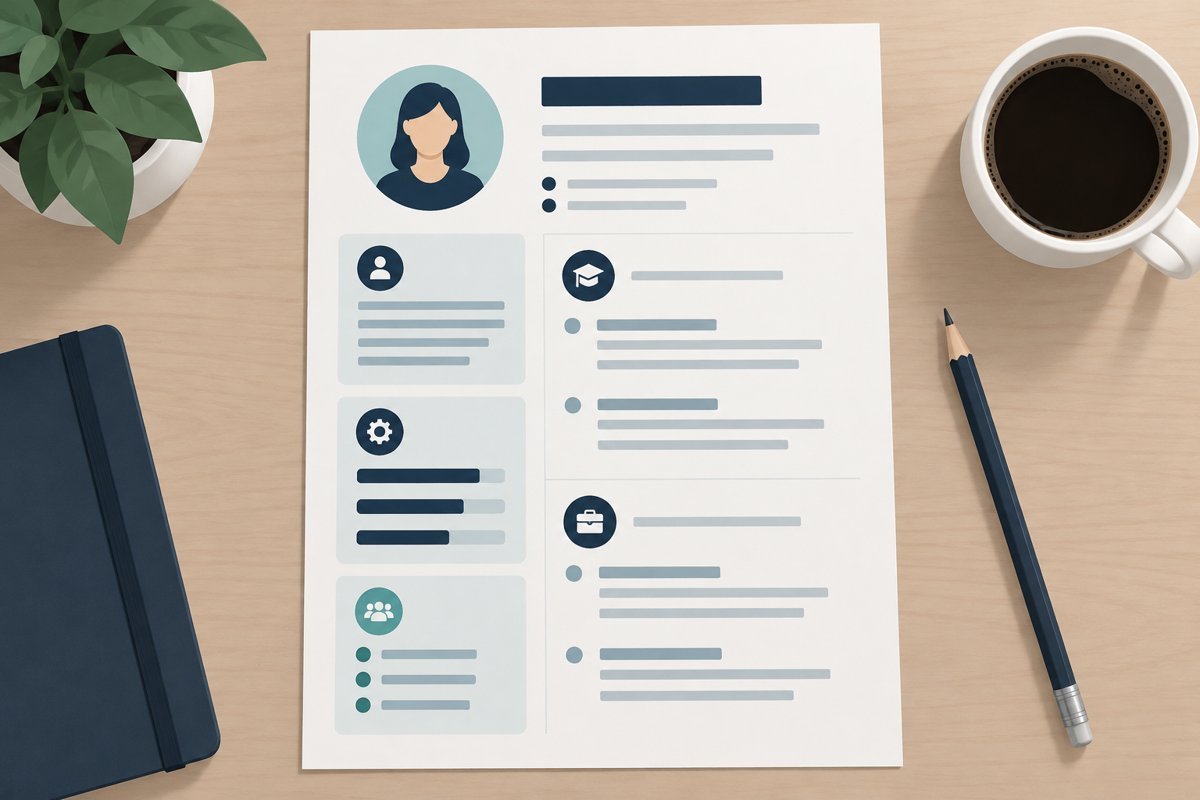
Keep the CV to one page, with a clean layout and a standard font such as Arial or Calibri at 10 to 11 pt. Use this order:
- Contact details: full name, mobile number, email address and your town or suburb. Use a sensible email address based on your name. A photo is not required.
- Personal profile: two or three sentences on who you are, what kind of role you want and what you can offer.
- Education: your school, the highest grade you have completed or are completing, and your subjects and results where they help you.
- Skills: six to eight short points that match the job advert.
- Activities, volunteering and work experience: the items from the list above, most relevant first.
- References: two people who know you well, such as a teacher, a coach or a former employer, with their permission. Many South African employers ask for references at application stage, so have them ready.
Writing Your Personal Profile
The profile sits at the top and sets the tone. Keep it short, specific and free of clichés. For example:
“Recent Grade 12 graduate from Pretoria seeking an entry-level administration or retail role. Reliable and organised, with two years’ experience running a school stationery tuck shop and confident use of Word and Excel. Fluent in English, Afrikaans and Sesotho.”
Notice what it contains: a clear target role, a real piece of experience, a practical skill and the languages spoken. That is enough. Change the first line each time you apply so it matches the job on offer.
Presenting Your Education Honestly
If you have matric (NSC)
List your school, the year you wrote or will write your National Senior Certificate, and the subjects you took. If your results are good, include your matric symbols or percentages for the subjects that match the job, such as Mathematics for a bookkeeping role. If you are still in Grade 12, write “Grade 12, expected completion November 2026” and include your latest results. Mention your pass type (for example Bachelor’s pass) only if it helps the application.
If you do not have matric
Do not hide it and do not claim a qualification you do not hold. Employers verify matric certificates, and a false claim usually ends the process and can cost you the job later. State the truth plainly and move the emphasis to what you have achieved:
- Write your education as “Grade 11 completed, [school name], [year]” or the highest grade you passed.
- List any short courses, skills programmes or NQF-registered certificates, with the provider and year. These can include computer literacy, first aid, a TVET college course, a SETA-accredited programme or an online certificate.
- If you are completing matric through the Second Chance Matric Programme or at an adult education centre, say so and include the expected completion date. It shows initiative.
- Put your skills and practical experience higher on the page so a reader sees them first.
Many roles, including learnerships, retail, hospitality, call centres, general assistant and warehouse positions, can be applied for with the right practical experience and a willingness to learn. Read each advert carefully, apply where you meet the requirements, and be upfront in your CV and your application.
Common Mistakes School Leavers Make
- Writing “references available on request” and nothing else. Name two people, with their consent, and include their contact numbers.
- Using an unprofessional email address. Create a simple one using your name.
- Listing every subject and every award since primary school. Keep what is recent and relevant.
- Using one CV for every application. Adjust the profile and the skills list to match each advert.
- Spelling and layout errors. Ask a teacher, relative or mentor to proofread before you send.
- Including your ID number, marital status or photo by default. They are not needed in the first application. Share ID details when an employer asks for them.
- Padding the CV with vague claims. Every line should say what you did, not just what you are like.
A Short Checklist Before You Apply
- One page, saved as a PDF or Word file named “Firstname Surname CV”.
- A profile that names the role you are applying for.
- Education stated accurately, including any gaps.
- Two references with up to date contact details.
- Every point backed by a real example.
- Proofread by a second person.
Frequently Asked Questions
Can I write a CV in South Africa without a matric certificate?
Yes. State your highest completed grade honestly, list any courses or certificates, and focus on practical skills and experience. Many entry-level employers hire on reliability and attitude, and some roles do not require matric. Check each advert’s requirements.
What should a CV for a first job include?
Contact details, a short personal profile, your education, a skills list, any school, volunteering or part-time experience, and two references. Keep it to one page.
Should I include a photo or my ID number on my CV?
Not by default. A photo is not required, and ID details can be supplied when an employer asks for them.
How long should a school leaver CV be?
One page. Employers reviewing entry-level applications read quickly, so keep the content relevant and easy to scan.
Can I put school activities on my CV?
Yes. Prefect roles, sports teams, fundraisers and clubs show responsibility and teamwork, which is exactly what employers look for in someone without work history.
Want a professionally written first CV that presents your education and experience with confidence?
Explore CV Writing with Brendan Hope or request a free CV review.
Related reading: Graduate CV tips: how to land your first job in South Africa, What to include in an undergraduate CV and CV writing guidelines for South Africa.